
As an Amazon Associate I earn from qualifying purchases. Buying through our links may earn us a commission at no extra cost to you. Affiliate disclosure.
For a permanent bulk-meat packaging station, we would start with the VacMaster VP215 when its pouch size suits the cuts and oil-pump maintenance fits your routine. Choose the dry-pump VP210 when avoiding oil changes matters more, the USV32 for a lighter household setup, or an external machine such as the LEM MaxVac 500 when package length is the main obstacle.
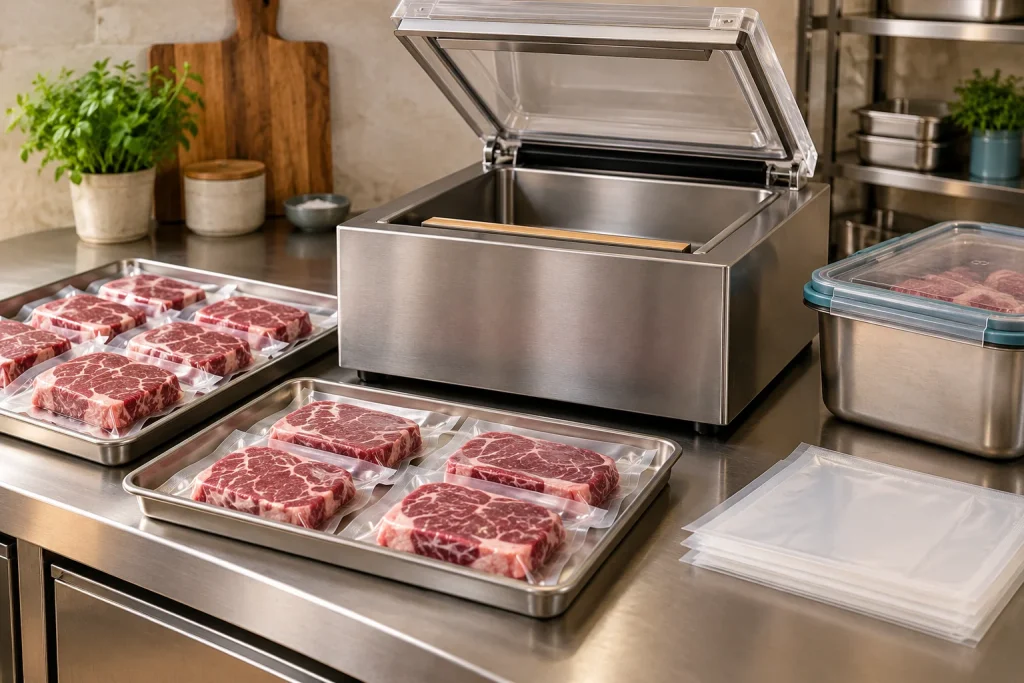
The best vacuum sealers for bulk meat are the ones that can support the whole processing day. That includes filling bags, handling wet surfaces and sharp bones, inspecting seals, taking required pauses and getting food into cold storage. A larger pump or a commercial label cannot tell you whether a particular cut fits or whether the household can manage the equipment. The six choices below address different versions of that job, including the point at which a chamber machine stops being the most practical answer.
Plan the Whole Processing Session
Write down the number of finished packages you expect, the largest regular cut and the space available for setup. Separate a routine of weekly ground-meat portions from a seasonal processing day involving many different cuts. The equipment may overlap, but the required pace and tolerance for pauses are different.
Also distinguish food size from food quantity. Forty small pouches create a workload question; one long fish fillet creates a fit question. Buying a more powerful pump solves neither automatically. Eliminate the wrong package format first, then compare the supported session and maintenance burden. That order prevents spending more on a larger machine that still fails the food you most want to keep whole.
Compare Our Picks
| Product | Best for | Main consideration | Pricing |
|---|---|---|---|
| VacMaster VP215 | Permanent bulk-packaging station | Oil maintenance and heavy setup | View on Amazon |
| Avid Armor USV32 | Longer household pouches | Filled fit, session limits and current supply | View on Amazon |
| VacMaster VP210 | Dry-pump bench alternative | Substantial placement and lifting | View on Amazon |
| VacMaster VP230 | Wider pouch-mouth requirement | Confirm revision, parts and support | View on Amazon |
| LEM MaxVac Pro+ 1380 | LEM oil-pump chamber alternative | Heavy setup and model-specific oil care | View on Amazon |
| LEM MaxVac 500, SKU 1253 | Suitable long external packages | Textured material and different wet-food handling | View on Amazon |
1. VacMaster VP215 — Best for a Permanent Batch Station

The VP215 is our preferred starting point for buyers building a dedicated station around repeat batches. It combines a rotary oil pump with a supported 10 × 13-inch pouch class. That makes it relevant to regular meat portions that fit this format, including a mixture of smaller and larger bags within the machine’s permitted arrangement.
Its approximately 84-pound weight changes the purchase from a countertop appliance decision into a workstation decision. Plan stable support, a safe delivery route and access for oil service before ordering. The useful benefit of a permanent position is that filling, loading and unloading can be organized around the machine instead of rebuilding the workspace for every session.
We would choose it over a lighter household model when its full operating routine suits the required batch and the buyer accepts pump maintenance. We would avoid buying it simply because another machine’s chamber looked small in a photograph. Measure the actual cut and pouch first, then confirm the selected unit’s service and rest instructions. Our VP210 versus VP215 comparison explains why the pump choice is separate from a capacity upgrade.
Why It’s Our Top Pick
The VP215 fits the brief of an organized, permanent bulk-packaging station: a serviceable oil pump, a familiar household meat-pouch class and a bench layout around which the rest of the work can be planned. It earns our top position when the regular cuts fit and its upkeep is acceptable. For a kitchen that must store the machine after each use, or a buyer who wants to avoid oil work entirely, another option in this guide is the more sensible choice.
Key Features
- Rotary oil-pump chamber design.
- A supported 10 × 13-inch pouch class.
- A bench-machine format in an approximately 84-pound weight class.
Pros
- Suits a station that can remain assembled for repeat batches.
- Serviceable pump ownership for buyers willing to perform required upkeep.
- Accommodates several smaller pouch sizes within its supported format.
Cons
- Heavy equipment needs planned support and handling.
- Oil checks and changes are part of ownership.
- The pouch envelope still limits long or unusually bulky cuts.
2. Avid Armor USV32 — Best for a Lighter Household Setup
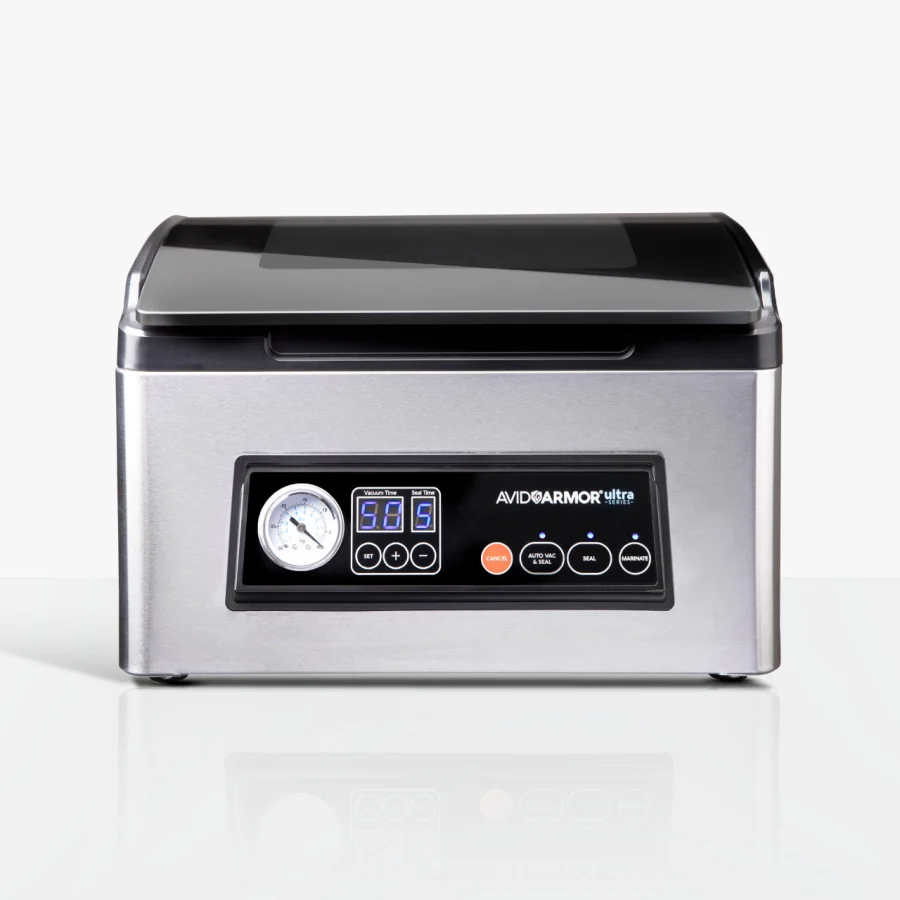
The USV32 is the household alternative when longer chamber pouches are needed without committing to a much heavier bench machine. It supports flat pouches up to 11 × 13 inches and has a stainless-steel chamber. That extra length is a practical reason to consider it when shorter compact models fail a regular portion.
At 26.4 pounds, it belongs to a different handling category from the larger VacMaster and LEM bench options. It still needs a stable position and safe moving plan. Its 22.5-inch open-lid clearance is particularly important beneath wall cabinets, where the machine can fit while closed but be awkward to load in place.
We would favor it for a household processing familiar portions in a manageable session, with enough room for its larger body. Confirm the complete batch guidance instead of assuming a larger chamber in the same brand supports nonstop work. Also establish a deliverable current offer before planning around this model; its presence in a comparison table is not a stock guarantee. The USV20 versus USV32 guide explains whether the longer pouch format solves your particular limitation.
Key Features
- Supported flat pouches up to 11 × 13 inches.
- Stainless-steel chamber with adjustable timing.
- Dry pump and a 26.4-pound listed weight.
Pros
- A longer pouch envelope in a household-oriented format.
- Less handling commitment than a substantially heavier bench unit.
- Avoids routine pump-oil changes.
Cons
- Session limits still need matching to the intended batch.
- The open lid requires substantial overhead clearance.
- Current supply needs checking with the selected seller.
3. VacMaster VP210 — Best Dry-Pump Bench Alternative

Choose the VP210 when a bench-machine layout suits the work but routine pump-oil service is unwelcome. Its dry pump is the central ownership difference from the VP215. Both belong in a comparison of suitable 10 × 13-inch pouch arrangements, so buying one over the other is not a simple move into a larger package class.
The VP210 weighs about 72 pounds and has adjustable vacuum and seal controls. It needs the same basic planning discipline as other substantial equipment: stable support, comfortable loading height and access around the body. A dry pump reduces one maintenance task; it does not make repeated lifting into a cupboard a convenient plan.
We would choose it for buyers who have established the pouch fit and want to keep pump upkeep simpler. Compare the full session, including sealing and required pauses, before making speed the deciding factor. A few seconds described for one part of a cycle may have little practical effect if filling or inspection controls the day’s pace. Ask about replacement sealing parts and service access as well, because those are more useful ownership questions than a broad “maintenance-free” label.
Key Features
- Dry-pump bench-machine design.
- A supported 10 × 13-inch pouch format.
- Adjustable vacuum and sealing controls.
Pros
- Removes routine pump-oil changes from the workstation routine.
- A direct alternative for buyers comparing the VP215’s ownership demands.
- Suitable for a stable, dedicated position.
Cons
- Still a heavy machine with a substantial handling commitment.
- Cleaning, gaskets and sealing consumables remain relevant.
- The dry pump does not establish unlimited session capacity.
4. VacMaster VP230 — Best Wider-Pouch Option to Compare
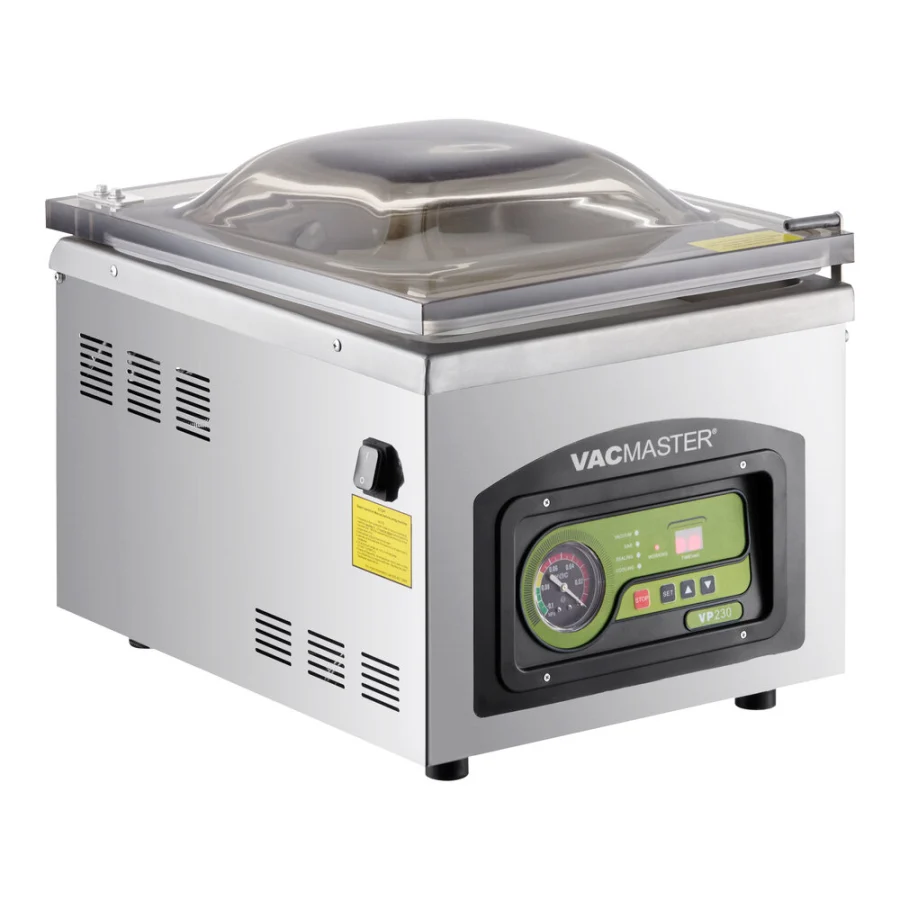
The VP230 is the option to examine when pouch-mouth width is the limiting requirement. Its approximately 12-inch seal-bar format gives this shortlist a wider-mouth alternative to the 10-inch pouch class of the VP210 and VP215. That can matter for a broad cut that is already short enough to fit the chamber length.
More width is useful only if the loaded food also clears the lid and reaches the sealing position correctly. A thick, irregular cut consumes film around its sides and may be a worse fit than a broad, thin package. Use the filled pouch rather than a flat measurement of the meat alone when deciding whether the wider machine solves the problem.
Confirm the exact selected revision, included components and current service route before buying. Older specifications and current retailer offers should not be treated as interchangeable without that check. We would compare the VP230 for a repeated width problem, while choosing a smaller suitable model when the extra width would mostly sit unused. Its heavy oil-pump format also means the bench and maintenance plan need to be settled, rather than left as details to solve after delivery.
Key Features
- An approximately 12-inch seal-bar format.
- Oil-pump chamber-machine family.
- A substantial tabletop workstation layout.
Pros
- Adds a wider-mouth candidate to the equipment comparison.
- Relevant when width repeatedly rules out smaller supported pouches.
- Keeps the food inside a chamber rather than relying on external suction.
Cons
- Current revision, support and replacement parts need confirmation.
- Heavy placement and oil-service requirements.
- A wider mouth does not remove restrictions on package height or length.
5. LEM MaxVac Pro+ 1380 — Best LEM Oil-Pump Alternative

The Pro+ 1380 is the LEM model to compare when the purchase is a permanent oil-pump chamber station. It weighs about 88 pounds and accepts bags up to 10 inches wide. The important point is that its larger body should not be mistaken for permission to use an arbitrarily wide bag.
Its controls and layout are separate from the lighter Pro 1745. If you already use LEM processing equipment, that brand familiarity may help organize a support relationship, but the chamber still needs to fit the actual package. Check the permitted loading position and use the selected model number for parts and oil requirements.
We would shortlist the 1380 alongside the VP215 when the workstation can support either and its chamber arrangement suits the cuts. Compare practical access to the controls, the service area and the reset between packages. LEM distinguishes its larger oil-pump model from the 1745 for extended batches, while also advising cooling between sealing cycles. Plan around the applicable instructions rather than translating that into a promise that the machine can work indefinitely without pauses. Our Pro versus Pro+ comparison keeps those different ownership commitments clear.
Key Features
- Oil-pump chamber machine, model 1380.
- Bags up to 10 inches wide.
- A listed weight of approximately 88 pounds.
Pros
- An alternative permanent oil-pump station within the LEM range.
- Worth comparing when its layout suits the regular cuts.
- A clear step away from frequent portable-appliance handling.
Cons
- Substantial lifting and support requirements.
- Requires the correct oil-maintenance routine.
- Large external dimensions do not mean unrestricted pouch width.
6. LEM MaxVac 500 — Best External Alternative for Long Packages
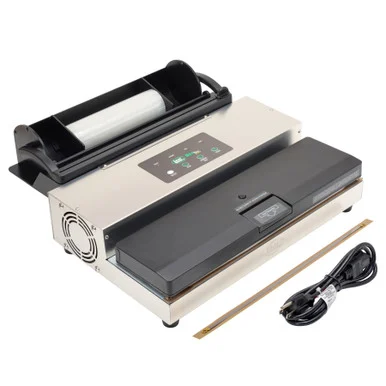
The MaxVac 500, SKU 1253, answers a different problem: long food that is awkward to fit inside a chamber. Its 14-inch seal bar works with compatible external-suction material, and the removable roll holder and cutter support custom-length bags. The food remains outside the machine, so bag length can be chosen around the cut.
That makes it relevant for suitable long fillets or other portions where a chamber’s fixed dimensions create unnecessary dividing. It also changes the workspace. The full bag needs support in front of the sealing area, and the mouth must stay positioned correctly while the cycle runs. Include that package support when measuring the counter rather than comparing appliance footprints alone.
Choose it for the package format, not as a substitute for chamber-style free-liquid loading. Use the model’s wet-food preparation instructions and compatible textured film. Rolls also add cutting and a bottom-seal step, which affect the time needed for a large batch. The stated extended-run capability is a product specification; your finished-package pace will still depend on filling, loading, sealing and inspection. Compare the two equipment types if length is driving the purchase.
Key Features
- External suction sealer with a 14-inch bar.
- Compatible textured bags or roll material.
- Removable roll holder and cutter for custom-length packages.
Pros
- A useful alternative when fixed chamber length is the obstacle.
- Custom-length material can suit long cuts and fillets.
- Avoids buying a larger chamber solely to solve a length problem.
Cons
- Wet-food handling differs from a chamber machine.
- Requires support for the food outside the appliance.
- Rolls add cutting and bottom-sealing work to the session.
Quick Tips
- Measure the longest, broadest and thickest regular filled package.
- Count finished pouches rather than estimating workload from meat weight alone.
- Plan the required pauses before starting a large batch.
- Use suitable food-contact puncture protection for sharp bones when instructed.
- Arrange cold food, clean bags and completed packages as separate work areas.
Match Cuts to the Package Before Comparing Pumps
Ground meat portioned into repeat shapes creates a different chamber problem from an irregular bone-in cut. A larger chamber may handle the second shape better, but a wider bag can also change how the first shape is packed. Choose a small set of regular package formats rather than assuming one oversized pouch is the answer to every cut.
Include the film that wraps around the food and the empty neck required for sealing. Side seams and food thickness reduce usable capacity. A cut that appears narrower than a pouch’s flat width may still be difficult to insert or position correctly. Our size guide explains how to measure the loaded arrangement.
For unusually long food, decide whether keeping it whole is a real requirement. If it is, an appropriate external machine may be a more direct solution than paying for chamber capacity in every dimension. If dividing the food matches the intended meal, a smaller chamber may already do the job.
Treat Bones and Sharp Edges as a Material Decision
Bone tips can puncture film during loading, evacuation or movement in the freezer. More thickness may help with a particular load, but it does not make a bag puncture-proof. Compare the pouch’s intended use and any approved food-contact bone guard rather than adding an improvised insert.
Check the entire package after sealing, including areas where the food presses against the film. A clean seam cannot compensate for a small hole elsewhere. Consider how completed packages will be stacked and moved, because abrasion after the cycle is part of the packaging problem too.
Use the same compatible material when comparing costs or settings. A nominal three-mil pouch and another brand’s four-mil product can differ in more than thickness. Our pouch-thickness comparison separates that choice from unsupported claims that one thickness always prevents failures.
Estimate Finished-Package Time Honestly
Start with the complete machine cycle: evacuation, sealing, any cooling stage and venting. Then account for filling, loading, unloading and inspection. Some tasks can overlap while the machine runs; others cannot. Keep that distinction clear so a pause is not either omitted or counted twice.
Here is a hypothetical planning example. Forty packages at an assumed 90 seconds of complete, non-overlapping work per package take 60 minutes. Add a 10-minute separate rest and 15 minutes for setup and cleanup, and the session becomes 85 minutes. Those assumptions are a worksheet, not a speed result for any model above.
The useful question is which part of your process limits the session. If one person cannot fill and label bags quickly enough, buying a faster pump may leave that bottleneck untouched. If a required machine rest interrupts every planned batch, the supported workload deserves more attention. Use our duty-cycle guide to build a realistic comparison.
Build the Station Around Food Handling
Place the machine where the lid opens comfortably and the controls are visible without reaching across food. Reserve a clean bag area, a filling area and a place for inspected packages. A stable support should be selected for the actual machine and its operating requirements, rather than assuming any convenient folding table is suitable.
Keep the bulk of perishable food appropriately cold while working with manageable amounts. Equipment pauses do not extend the safe time food can wait on a counter. When a session is interrupted, deal with food storage before troubleshooting or rearranging the workstation.
Plan the final destination as well. Freezer space, labels and sensible portion shapes affect whether the completed packages are useful later. Vacuum packaging does not make raw or cooked perishable meat suitable for pantry storage. The food-safety guide explains why a tight package and safe storage are different questions.
Compare Maintenance and Consumables Before Paying More
For an oil-pump machine, confirm the specified oil, level-check procedure and service schedule for the selected unit. Also ask about gaskets, seal wires, protective tape and other wear parts. An appliance can have an attractive purchase price while being awkward to support during a processing season.
For a dry-pump choice, compare cleaning, cooling instructions and sealing consumables with the same care. Avoid treating the absence of oil changes as a complete maintenance comparison. The useful measure is whether the owner can perform the required work and obtain the right parts.
Calculate ongoing bag cost using the sizes you will actually use. Include roll offcuts and bottom seals when comparing an external machine with precut chamber pouches. Keep hypothetical waste assumptions separate from observed results. Our ownership-cost calculator lets you compare lower annual usage as well as a busy seasonal scenario.
Check Delivery and Returns for Heavy Equipment
The delivery route deserves attention before a heavy bench machine reaches the doorstep. Check the packaged weight, access through doors and the equipment needed to place it safely. The appliance’s working weight does not describe every handling demand of its shipping carton.
Read the selected seller’s damage-reporting, return and warranty terms. Establish whether an unsuitable machine would need collection or shipment, who arranges that process and what condition the packaging must remain in. Keep the carton until the model, included components and permitted startup checks have been confirmed.
These details matter most when comparing two machines that both fit the food. A clear local service or return route can be more valuable than a modest purchase-price difference. Resolve it before planning a processing day around a delivery date, and leave time to identify transit damage or an incorrect unit without food already waiting to be packaged.
Questions About Bulk-Meat Vacuum Sealers
Should a seasonal user buy a permanent bench machine?
A permanent machine makes sense when the processing day needs its supported batch routine and a suitable bench remains available afterward. Compare the handling commitment: VP210 is roughly 72 pounds and VP215 roughly 84, while USV32 is 26.4 pounds. Those are very different storage propositions. For smaller batches spread across the year, a lighter household setup can be easier to use. For a concentrated season, plan the bench, service supplies and cold-storage space before delivery.
Is the largest pump always the best option?
No. Suppose a faster pump saves five seconds during an otherwise 90-second package routine. That is about a six-percent reduction in complete package time, not a doubling of output. This is a hypothetical illustration, not a result for these models. Filling, sealing, cooling and inspection can dominate the session. Compare the complete routine and mandatory pauses before paying for a pump specification whose advantage may be small in your actual workflow.
Can the same machine handle meat and fish?
Yes, when both portions fit its packaging format. A shorter wet fish portion and a meat portion can both suit a chamber. A long fillet that must stay whole may favor a compatible external sealer because the food remains outside the appliance. Choose the bag for sharp bones as well as size, and keep the food’s preparation and storage requirements separate from equipment compatibility. A shared machine does not make every food safe under one storage schedule.
Is a used chamber machine a sensible saving?
Compare its total acquisition cost with a suitable new unit: purchase, collection or freight, known service, missing parts and a repair reserve. Inspect the lid and gasket, identify the exact pump, and ask for a demonstration with a compatible pouch and load. An oil leak, damaged glass or missing service history changes the decision even when one bag seals. Our used-machine checklist covers the inspection and support questions.
Should I buy a large case of bags with the machine?
Start with a smaller compatible pack or the included pouches until the useful sizes are clear. A nominal 10 × 13 pouch may fit the machine but be wasteful for every small portion; another cut may need more room around a bone. Move to a case once the same size is being reordered regularly. Compare delivered cost per bag you will use, including the sizes left over from an assortment, rather than treating a 1,000-count box as automatic value.
Our Buying Recommendation
Choose the VP215 for a permanent oil-pump station when the regular cuts fit its pouch class. Choose the VP210 to avoid oil changes, or the LEM 1380 when its own layout and support route suit the work better. Consider the USV32 for a lighter household setup, VP230 for a verified width requirement, and MaxVac 500 for suitable long external packages. Buy around the full processing day: food fit, supported pace, maintenance and cold storage all need to work together.
Sources
- VacMaster VP215: manufacturer specification sheet
- Avid Armor USV32: dimensions and pouch sizes
- VacMaster VP210: specifications and pouch format
- VacMaster VP230: specification sheet
- LEM MaxVac Pro+ 1380: specifications
- LEM MaxVac 500: specifications
- LEM chamber-sealer workshop: cooling and batch guidance
- USDA: vacuum-packaged meat still requires cold storage