

Moving and Storing a Chamber Sealer
Plan chamber-sealer lifting, support, permitted orientation, oil handling and storage using the exact model instructions and a practical checklist.
Practical guides to sizing, liquids, cleaning, maintenance, troubleshooting and safe food-handling decisions.
Plan chamber-sealer lifting, support, permitted orientation, oil handling and storage using the exact model instructions and a practical checklist.

Understand what vacuum sealing can and cannot do for food safety. Separate tight packages, cold storage, jar evacuation and validated preservation.

Verify vacuum-sealer certification claims against official records. Distinguish electrical safety, sanitation, standards and exact-model listing scope.

Check model-approved powder packaging, fill limits, headspace and accessory protection before vacuum sealing flour or other fine dry ingredients.
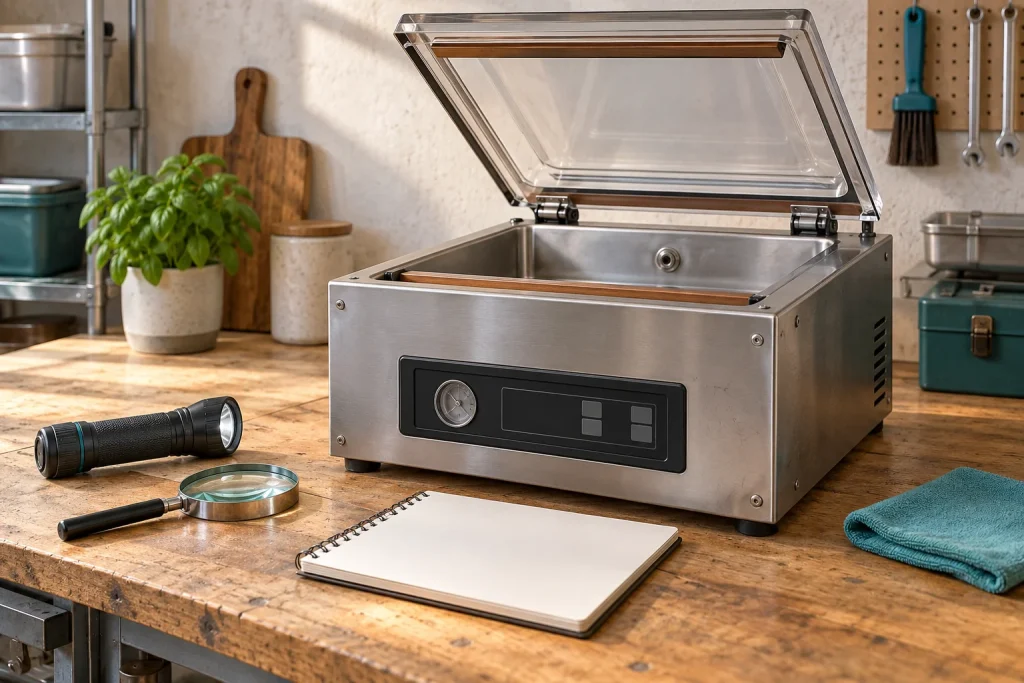
Evaluate a used chamber sealer by model identity, condition, documented operation, parts support, transport and total cost before making an offer.

Understand chamber-sealer pressure claims, convert common units and compare gauge with absolute pressure using clearly labeled worked examples.

Understand L/min, m³/h, ultimate pressure and complete-cycle timing. Use an idealized calculation without mistaking nominal flow for tested throughput.

Assess chamber-sealer longevity through documented use, parts support, service and condition. Separate warranty length from an unsupported lifespan promise.

Check vacuum-sealer warranty scope, country, authorized seller, commercial use, wear parts and transfer terms before relying on a headline period.

Separate double wires, wider seams, repeated passes and two seal bars. Learn what vacuum-sealer seal design can and cannot prove about a package.