
As an Amazon Associate I earn from qualifying purchases. Buying through our links may earn us a commission at no extra cost to you. Affiliate disclosure.
For a small kitchen, we would start with the Avid Armor USV1 for modest portions, the USV20 for adjustable timing, or Anova for cooking presets. Choose the machine that fits your normal filled pouch and leaves enough room for loading, the open lid and storage.
Compare Our Picks
| Product | Best for | Main consideration | Pricing |
|---|---|---|---|
| Avid Armor USV1 | Small portions and storage-sensitive kitchens | Presets; limited room for bulky loads | View on Amazon |
| Avid Armor USV20 | Adjustable timing in a compact format | Shorter pouch envelope | View on Amazon |
| Anova Precision Chamber | Packaging plus cooking presets | Extra modes may add little to freezer-only use | View on Amazon |
| LEM MaxVac Pro 1745 | A deeper alternative chamber layout | More handling and model-specific pauses | View on Amazon |
| Vesta Precision V513 | Removable cleaning components | Select V513; confirm seller support | View on Amazon |
| Avid Armor USV32 | Longer household pouches | Larger setup; check the current offer | View on Amazon |
Use our filled-pouch and counter-space guide to rule out poor fits before comparing extra features.
1. Avid Armor USV1 — Best for Small Portions
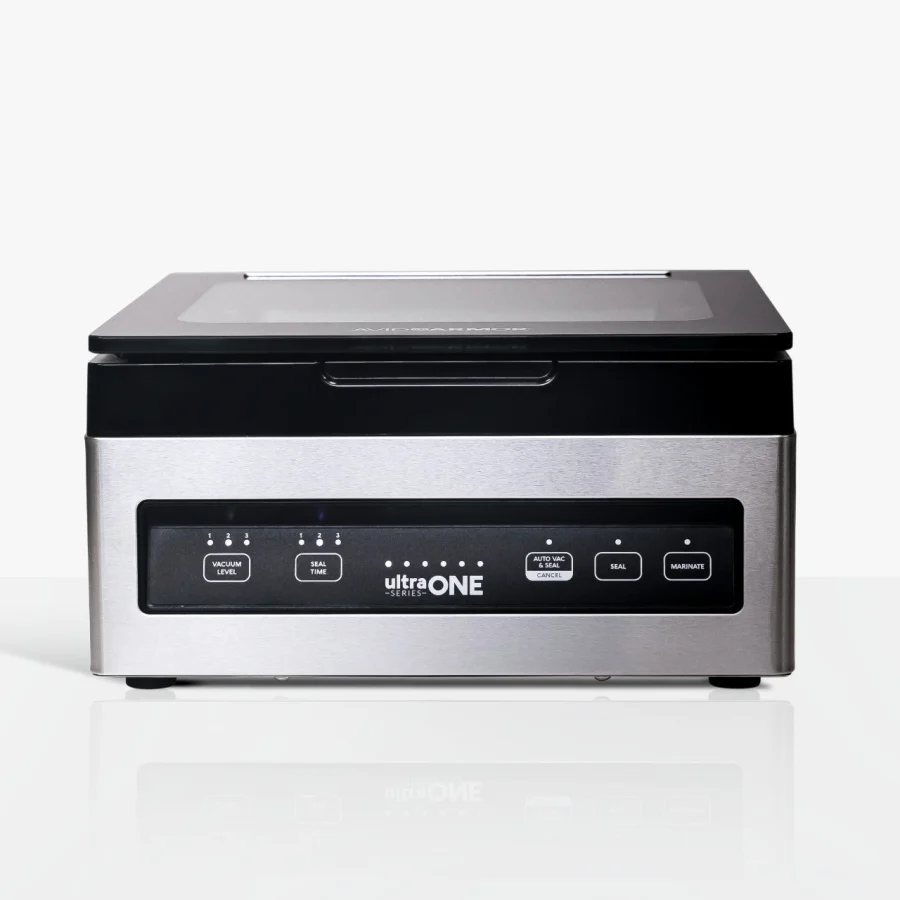
The USV1 is our first choice for small kitchens that package modest portions. Its compact format, preset vacuum and seal levels, and dry pump suit a straightforward home routine without pump-oil changes.
Choose it around your thickest regular filled pouch. If the food needs awkward dividing to fit, move to a larger chamber rather than sacrificing the portions you actually want.
Why It’s Our Top Pick
The USV1 fits the priorities of a small kitchen: a compact format, simple presets and a dry pump. It is our top pick when smaller portions cover most of your packaging and storage space matters more than a larger pouch envelope.
Key Features
- Preset vacuum and seal levels.
- Compact chamber format for smaller portions.
- Dry pump with no routine pump-oil changes.
Pros
- A practical starting point when counter and storage space matter.
- Preset controls keep the initial choices simple.
- Avoids the oil-service routine of an oil-pump bench machine.
Cons
- Limited room for bulky or long portions.
- Less control over selected time intervals than a timed interface.
- Still needs open-lid clearance and a safe lifting plan.
Compare USV1 versus USV20 and read our USV1 review for the main ownership tradeoffs.
2. Avid Armor USV20 — Best for Adjustable Timing

The USV20 suits home users who want adjustable vacuum and seal timing in a compact chamber machine. It is a strong choice for regular smaller portions, including liquids loaded within its fill instructions.
Its shorter pouch layout is the main buying constraint. Measure the filled bag with a clean neck, then leave room to load it and open the lid comfortably.
Key Features
- Adjustable vacuum and seal timing.
- Dry-pump chamber system.
- Liquid-loading guidance limits the pouch to no more than half full.
Pros
- Selected time intervals are easy to record for repeat packages.
- Combines compact packaging with a supported liquid-pouch workflow.
- No routine pump-oil changes.
Cons
- Shorter pouch envelope than the USV32.
- Liquid fill and mouth position restrict usable portions.
- Oil-free operation does not remove cleaning or cooling requirements.
Use our USV20 pouch-fit guide and USV20 review before choosing bag packs.
3. Anova Precision Chamber — Best for Cooking Presets

Anova combines ordinary chamber packaging with cooking-oriented presets and manual controls. It is the most appealing option here when infusion and compression are part of the reason you want a chamber machine.
For a freezer-only routine, prioritize pouch fit and the normal sealing cycle. Extra modes earn their place only when you will use them; an open-container culinary process is different from sealing a soup pouch.
Key Features
- Preset culinary applications alongside manual controls.
- Compact countertop chamber design.
- Dedicated chamber pouches, separate from Anova’s external-sealer bags.
Pros
- Adds cooking functions to a home packaging setup.
- Manual controls provide an alternative to presets.
- A clearly identified chamber-pouch range simplifies the initial bag choice.
Cons
- Extra modes may add little for straightforward freezer portions.
- Bulky portions still need a filled-fit check.
- External Anova rolls and bags are different products.
Our Anova review and USV20 versus Anova comparison explain the tradeoffs.
4. LEM MaxVac Pro 1745 — Best Alternative Chamber Layout

The MaxVac Pro 1745 is worth choosing when its deeper chamber layout fits a regular portion that a shallower compact machine cannot accommodate. Adjustable controls and a dry pump keep it distinct from the heavier oil-pump Pro+ 1380.
Plan the whole session around filling, sealing and required pauses. The Amazon option linked here is a 1745 bundle, so compare the included items as well as the machine.
Key Features
- Dry-pump chamber machine, model 1745.
- Adjustable vacuum and sealing controls.
- A different loaded-pouch layout from the smaller compact options.
Pros
- An alternative for bulkier portions that pass its filled-fit check.
- Avoids routine pump-oil changes.
- Model-specific batch guidance helps plan larger sessions.
Cons
- More of a handling and counter-space commitment than the smallest models.
- Requires between-cycle and longer-session pauses.
- The Pro 1745 and Pro+ 1380 have different pump and ownership requirements.
Read our LEM 1745 review and 1745 versus USV20 comparison.
5. Vesta Precision V513 — Best for Removable Cleaning Components

The V513 stands out for its SmartVac controls and removable cleaning components. It deserves a place on the shortlist when access to the tray and seal bar is a priority in a wet-food routine.
Select the V513 rather than the V553 on shared product pages. Follow the washing instructions for each removable component; the rest of the appliance is not a rinse-clean unit. Confirm seller support and warranty eligibility for the selected offer.
Key Features
- SmartVac automatic control system.
- Removable tray and seal-bar components.
- V513 chamber size within the V5xx product family.
Pros
- Removable components provide access to areas that need cleaning.
- Automatic controls appeal to users who prefer fewer timing decisions.
- An alternative layout to the Avid Armor and Anova options.
Cons
- V513 and V553 dimensions must not be interchanged.
- Removable parts do not make the whole machine washable.
- Support and warranty terms need checking with the selected seller.
6. Avid Armor USV32 — Best for Longer Household Pouches
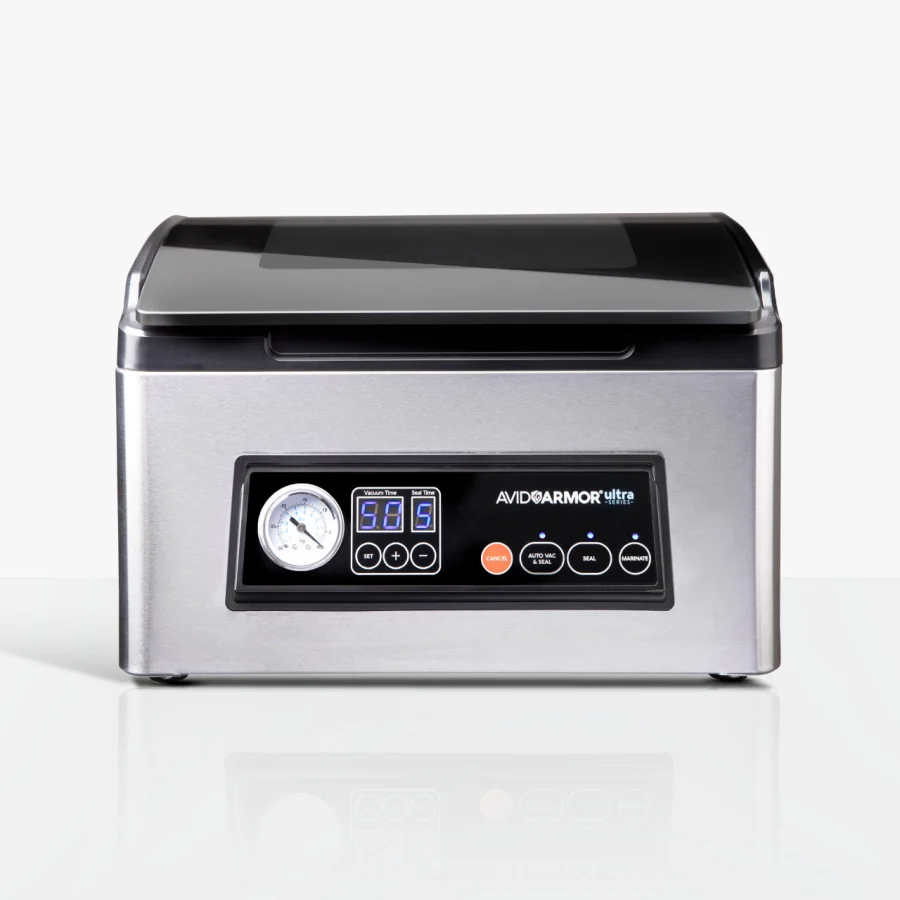
The USV32 is the capacity alternative for households that need longer pouches than the USV20 supports. Its stainless chamber and supported pouch sizes up to 11 × 13 inches make the shape of your regular portion the deciding factor.
The larger setup needs more room for loading and the open lid. Check the selected seller’s current offer before planning around it, and confirm the batch instructions for your workload.
Key Features
- Supported flat pouch sizes up to 11 × 13 inches.
- Stainless-steel chamber.
- Dry-pump design with adjustable cycle settings.
Pros
- Accommodates longer pouch formats than the USV20.
- Provides a household alternative to a heavier bench machine.
- No routine pump-oil changes.
Cons
- A larger footprint and lid-clearance requirement.
- Empty-pouch dimensions do not establish loaded food capacity.
- Current supply and the intended session limits need checking.
Use our USV20 versus USV32 comparison to decide whether the added capacity is useful.
Quick Tips
- Measure your thickest regular filled pouch, including a clean neck.
- Check the open lid and loading area, not only the closed footprint.
- Plan how the machine will move between its storage and working positions.
- Match the full batch to the model’s cycle and rest instructions.
- Compare annual pouch and maintenance costs after the machine passes the fit check.
Choose with a three-stage filter
First eliminate any candidate that fails a normal filled package or your usable workspace. Second compare the approved workload and maintenance obligations. Third compare total ownership cost for your annual use.
A small machine is poor value when it requires inconvenient portioning every week. A larger machine is poor value when it makes access difficult for capacity you rarely need. Neither problem is solved by a temporary discount.
Our ownership-cost guide uses transparent assumptions. Include equivalent bags, failed-package costs, consumables and the effort of storing the unit. Do not assume smoother-looking film automatically produces a fixed amount of annual savings.
What about a budget below $500?
Set a delivered-cost limit and check the current offer for each machine that passes your fit requirements. Include the selected bundle, shipping and any essential accessories.
A cheaper machine that fails the package-fit check is poor value. If no suitable model meets your budget, keep your existing equipment or reconsider the purchase.
Check these details before ordering
Confirm the exact model, voltage, seller, included accessories, approved uses, return route and warranty eligibility. Save the matching manual. Use manufacturer documentation for operation and obtain written clarification if two records conflict.
Questions about compact chamber machines
Will a compact model seal a family-sized roast?
Measure the intended portion in the intended pouch. Family size is not a standardized dimension, and weight alone does not show chamber fit.
Is an oil-free model maintenance-free?
It avoids pump-oil changes, but cleaning, gasket condition and sealing consumables still matter. Compare the whole ownership routine.
Should I choose the strongest advertised vacuum?
Only after understanding the reference, method and relevance of the figure. Package fit and dependable supported operation are better first filters than incomparable pressure claims.
Where to start
Choose the USV1 for storage-sensitive small portions, the USV20 for adjustable timing, and Anova when you will use its culinary functions. Compare LEM or Vesta for a different layout or cleaning design, and the USV32 for longer pouches. Let the filled package and working space settle the choice.
Sources
- Avid Armor: USV1 specifications
- Avid Armor: USV20 specifications
- Anova: Precision Chamber specifications
- LEM: MaxVac Pro 1745 specifications
- LEM: chamber-sealer workshop
- Vesta: V513 and V553 specifications
- Avid Armor: USV32 specifications
Product image credits: Avid Armor; Anova Culinary; LEM Products; Vesta Precision.
About the author
Seal Routine
Seal Routine helps home users choose chamber vacuum sealers, find compatible pouches and build a practical sealing routine. Our guides cover buying decisions, model comparisons, setup, maintenance and everyday ownership.