
As an Amazon Associate I earn from qualifying purchases. Buying through our links may earn us a commission at no extra cost to you. Affiliate disclosure.
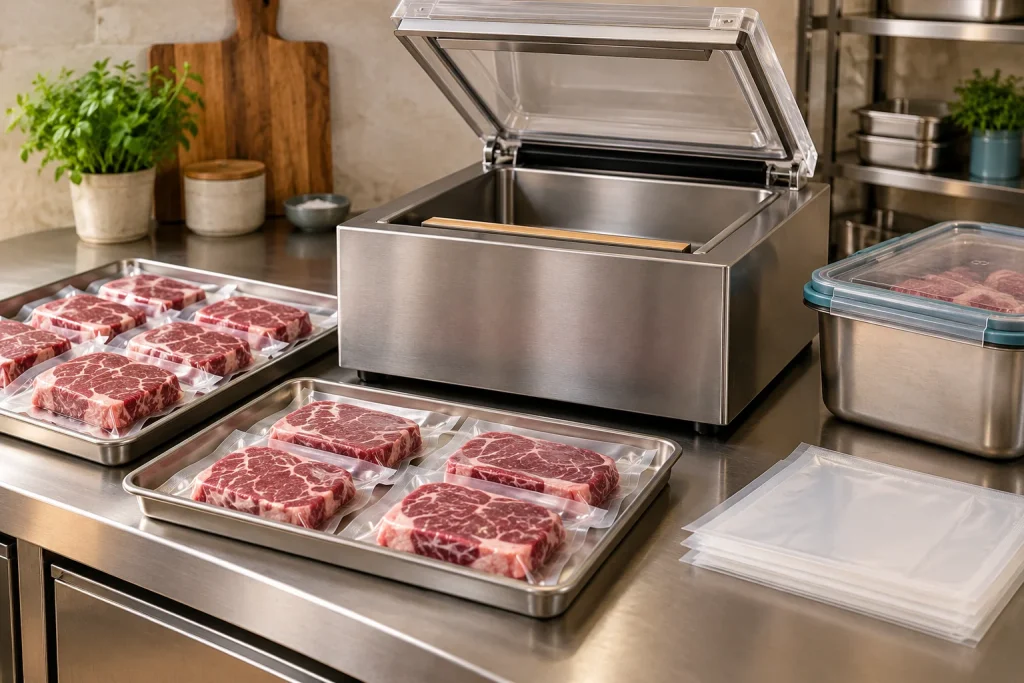
We would choose the VacMaster VP215 for a permanent bulk-meat packaging station when its pouch class fits the cuts and oil maintenance is acceptable. The other five options cover different priorities: a larger household chamber, a dry-pump bench machine, more pouch width, an alternative oil-pump layout, or long external packages.
Plan the Whole Processing Session
Count the finished packages, measure the largest regular cut, and include filling, loading, seal inspection, required rests and cleanup. A machine that fits one large pouch is not automatically suited to the whole batch. Keep perishable food in an appropriate cold-storage routine throughout the work.
Compare Our Picks
| Product | Best for | Main consideration | Pricing |
|---|---|---|---|
| VacMaster VP215 | Permanent bulk-packaging station | Oil maintenance and heavy setup | View on Amazon |
| Avid Armor USV32 | Longer household pouches | Filled fit, session limits and current supply | View on Amazon |
| VacMaster VP210 | Dry-pump bench alternative | Substantial placement and lifting | View on Amazon |
| VacMaster VP230 | Wider pouch-mouth requirement | Confirm revision, parts and support | View on Amazon |
| LEM MaxVac Pro+ 1380 | LEM oil-pump chamber alternative | Heavy setup and model-specific oil care | View on Amazon |
| LEM MaxVac 500, SKU 1253 | Suitable long external packages | Textured material and different wet-food handling | View on Amazon |
Use our filled-pouch and counter-space guide to rule out poor fits before comparing extra features.
1. VacMaster VP215 — Best for a Permanent Batch Station

The VP215 is our first choice for a permanent bulk-packaging station when the portion fits and you are comfortable maintaining an oil pump. Its 10 × 13-inch pouch class and serviceable pump make it a sensible step beyond a small kitchen machine.
Budget for safe placement, pump oil and service access. Match the operating instructions to the selected unit, including full-cycle and session pauses; an oil pump does not mean unlimited nonstop use.
Why It’s Our Top Pick
The VP215 is our top pick for a dedicated batch station because it combines a serviceable oil pump with a practical 10 × 13-inch pouch class. It makes the most sense when it can stay on a stable bench and its full operating and rest routine fits the number of packages you need.
Key Features
- Oil-pump chamber machine.
- 10 × 13-inch pouch class, subject to filled fit.
- Owner maintenance includes the specified oil checks and changes.
Pros
- A practical fit for a dedicated bulk-processing workstation.
- Serviceable oil-pump ownership rather than a disposable upgrade path.
- A clear pump-type alternative to the VP210.
Cons
- Oil level and service intervals become part of the routine.
- Heavy equipment needs stable support and a safe moving plan.
- Long or bulky cuts can exceed its usable package space.
Read our VP210 versus VP215 comparison and pump-oil guide.
2. Avid Armor USV32 — Best for Longer Household Pouches
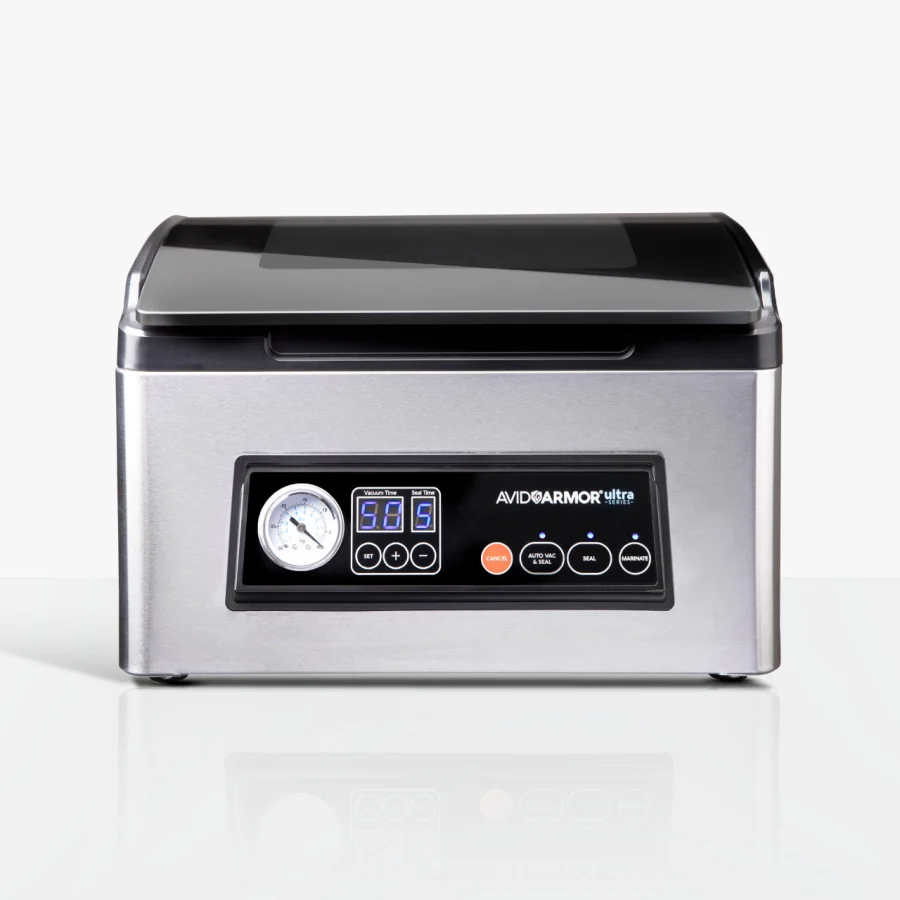
The USV32 is the capacity alternative for households that need longer pouches than the USV20 supports. Its stainless chamber and supported pouch sizes up to 11 × 13 inches make the shape of your regular portion the deciding factor.
The larger setup needs more room for loading and the open lid. Check the selected seller’s current offer before planning around it, and confirm the batch instructions for your workload.
Key Features
- Supported flat pouch sizes up to 11 × 13 inches.
- Stainless-steel chamber.
- Dry-pump design with adjustable cycle settings.
Pros
- Accommodates longer pouch formats than the USV20.
- Provides a household alternative to a heavier bench machine.
- No routine pump-oil changes.
Cons
- A larger footprint and lid-clearance requirement.
- Empty-pouch dimensions do not establish loaded food capacity.
- Current supply and the intended session limits need checking.
Use our USV20 versus USV32 comparison to decide whether the added capacity is useful.
3. VacMaster VP210 — Best Dry-Pump Bench Option

The VP210 is the bench-machine alternative for buyers who want a substantial chamber setup without pump-oil changes. Plan a stable, dedicated location rather than treating it as a machine to lift into a cupboard after each session.
Choose it for a supported package and workload. Moving from a compact design to a bench machine changes the space and handling commitment as much as the ownership routine.
Key Features
- Dry-pump chamber design.
- Bench-machine format for a dedicated packaging station.
- Model-specific operation and service instructions.
Pros
- Avoids oil changes while retaining a bench-machine layout.
- A direct alternative to the oil-pump VP215.
- Suitable for a planned, permanent workstation.
Cons
- Substantial lifting and support requirements.
- Dry-pump operation still involves cleaning and wear parts.
- Pump type alone does not establish the number of packages per session.
Compare VP210 versus VP215 before choosing the pump type.
4. VacMaster VP230 — Best Wider-Pouch Option to Check
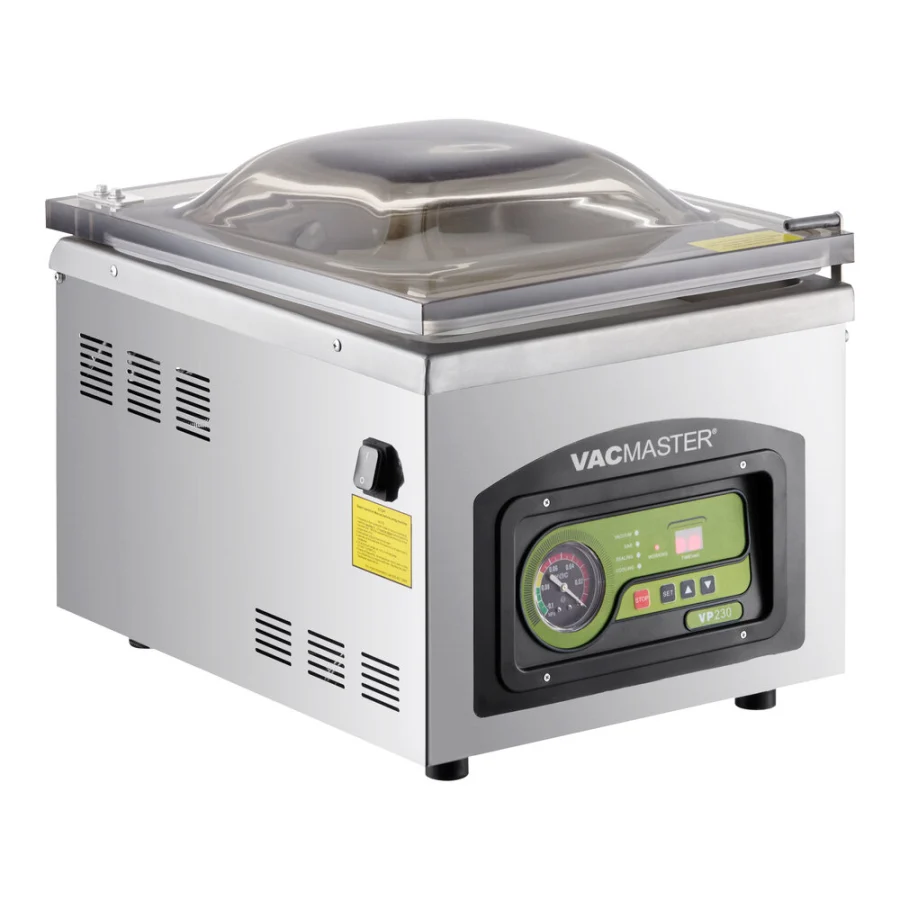
The VP230 is the wider-pouch alternative in this list, with a 12-inch seal-bar format. Consider it when pouch-mouth width is the constraint that rules out the smaller models.
Confirm the exact revision, loaded dimensions, service route and current warranty with the seller before ordering. Current listings and older VP230 manuals may refer to different revisions, so use the selected unit’s details for your workstation and bag order.
Key Features
- 12-inch seal-bar format.
- Oil-pump chamber-machine family.
- Tabletop bench setup with a substantial placement commitment.
Pros
- Adds a wider-mouth option to the shortlist.
- Relevant when pouch width matters more than a smaller closed footprint.
Cons
- Current revision and parts support require confirmation.
- Heavy setup and oil-pump maintenance.
- A wider seal bar is not proof that every bulky portion will fit.
5. LEM MaxVac Pro+ 1380 — Best LEM Oil-Pump Alternative

The MaxVac Pro+ 1380 is LEM’s oil-pump alternative for buyers planning a permanent chamber-sealing station. Compare its own chamber layout and controls rather than borrowing specifications from the lighter Pro 1745.
The useful upgrade is a better match to your normal filled portion and complete session. Confirm permitted pouch width, handling requirements and oil service before committing to the larger setup.
Key Features
- Oil-pump chamber design, model 1380.
- Separate Pro+ model with its own controls and chamber layout.
- Model-specific setup and maintenance requirements.
Pros
- An alternative oil-pump workstation to the VacMaster models.
- Allows a layout-based choice within the LEM range.
- A permanent setup can avoid repeated moving and lifting.
Cons
- Substantial weight and placement requirements.
- Requires the correct pump-oil maintenance.
- The larger body does not automatically provide a wider permitted pouch mouth.
Our LEM Pro 1745 versus Pro+ 1380 comparison keeps the two models separate.
6. LEM MaxVac 500 — Best External Alternative for Long Packages
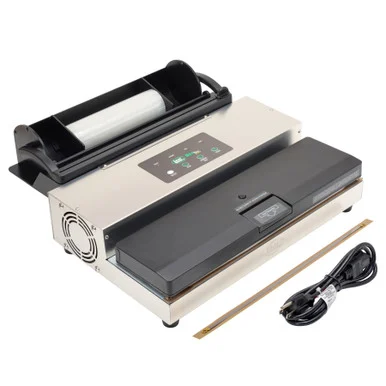
The MaxVac 500, SKU 1253, is the external-sealer option for suitable long packages. Its 14-inch seal bar lets you choose bag length around the food rather than the length of a closed chamber.
Use compatible textured bags or rolls and support the package outside the machine. Free liquid needs the model’s specific preparation method; this is not a substitute for chamber-style liquid loading.
Key Features
- External suction sealer, SKU 1253.
- 14-inch seal bar.
- Roll storage and cutting features for custom-length packages.
Pros
- Useful when package length rules out a chamber.
- Custom-length material can suit long cuts and fillets.
- An alternative to a large chamber-machine purchase.
Cons
- Requires compatible textured suction material.
- Wet-food handling differs from chamber sealing.
- Rolls add a bottom seal and cutting work.
Compare chamber versus external sealers and rolls versus precut bags.
Quick Tips
- Measure the longest and thickest regular cut in its filled pouch.
- Count loading, inspection, required pauses and cleanup in the session plan.
- Set up a stable bench and access for oil checks or approved servicing.
- Use compatible food-contact puncture protection for sharp bones when instructed.
- Keep meat cold and the work area clean while the machine rests.
Compare bags and sharp contents
Choose a pouch fitting the machine and the load, then consider its material and puncture-protection guidance. Bone or other sharp projections can change the packaging requirement.
VacMaster’s pouch-thickness guidance discusses thicker material or its bone-guard product for relevant loads. That is not a guarantee that a four-mil bag cannot puncture, and it does not authorize an improvised non-food-contact insert.
Our thickness guide separates material choice from universal strength claims. Inspect the whole package and consider abrasion during storage as well as the initial seal.
Build a batch plan before paying for more pump
Ask each seller for the exact full cycle, between-cycle pauses, session limit and required longer rest. If the answer is just “commercial grade,” ask for the manual or written support clarification.
A full-session estimate should include loading and inspection. Keep overlapping tasks separate from extra non-overlapping rests so the arithmetic is fair. The duty-cycle worksheet provides the structure.
Compare ownership cost using equivalent successful packages. If a costly machine’s only modeled advantage is a large annual bag saving, test the assumption at lower usage. Seasonal processing and year-round daily use are different scenarios.
Fish, hunting and bulk meat share equipment questions
Fish, hunting and bulk meat share the same equipment checks: portion fit, sharp projections, wet surfaces, total workload and cleaning. The food-handling and preservation requirements still depend on the particular food.
Do not assume vacuum packaging creates a safe pantry product. USDA guidance requires appropriate cold storage for vacuum-packaged perishable meat. Packaging quality and food safety must be assessed separately.
Questions buyers ask
Is a chamber machine always better for fish?
No. Measure the particular fillet or portion and consider moisture handling. A long package may favor suitable external equipment; a wet portion that fits may favor a documented chamber workflow.
Is the largest pump the safest purchase for hunting season?
Not without supported fit and session evidence. Include setup, parts, servicing and the actual number of packages needed.
Should I buy a used bench machine instead?
Only after checking condition, exact model, service support and realistic repair costs. Our used-machine checklist covers that separate decision.
Choose the workstation, not just the machine
Select a candidate that fits your portions and documented batch requirements, then plan support, storage, cleaning and service around it. If you need unsupported nonstop operation or an awkward loading workaround to make the purchase seem suitable, revise the shortlist before buying.
Sources
- Avid Armor: USV32 specifications
- VacMaster: current VP210 product record
- VacMaster: VP210 June 2024 manual
- VacMaster: VP210 and VP215 comparison
- VacMaster: VP215 support and manuals
- VacMaster: VP230 operator manual
- VacMaster: current chamber-machine catalog
- LEM: MaxVac Pro+ 1380 product page
- LEM: MaxVac 500 external sealer
- VacMaster: pouch thickness guidance
- USDA: vacuum-packaged meat and room-temperature storage
Product image credits: VacMaster; Avid Armor; WebstaurantStore; LEM Products.
About the author
Seal Routine
Seal Routine helps home users choose chamber vacuum sealers, find compatible pouches and build a practical sealing routine. Our guides cover buying decisions, model comparisons, setup, maintenance and everyday ownership.