

Vacuum Pressure Explained: Gauge, Absolute, kPa and inHg
Understand chamber-sealer pressure claims, convert common units and compare gauge with absolute pressure using clearly labeled worked examples.

Understand chamber-sealer pressure claims, convert common units and compare gauge with absolute pressure using clearly labeled worked examples.

Check vacuum-pouch cooking suitability by exact material, temperature, duration and supplier instructions. Thickness and BPA-free claims are not enough.
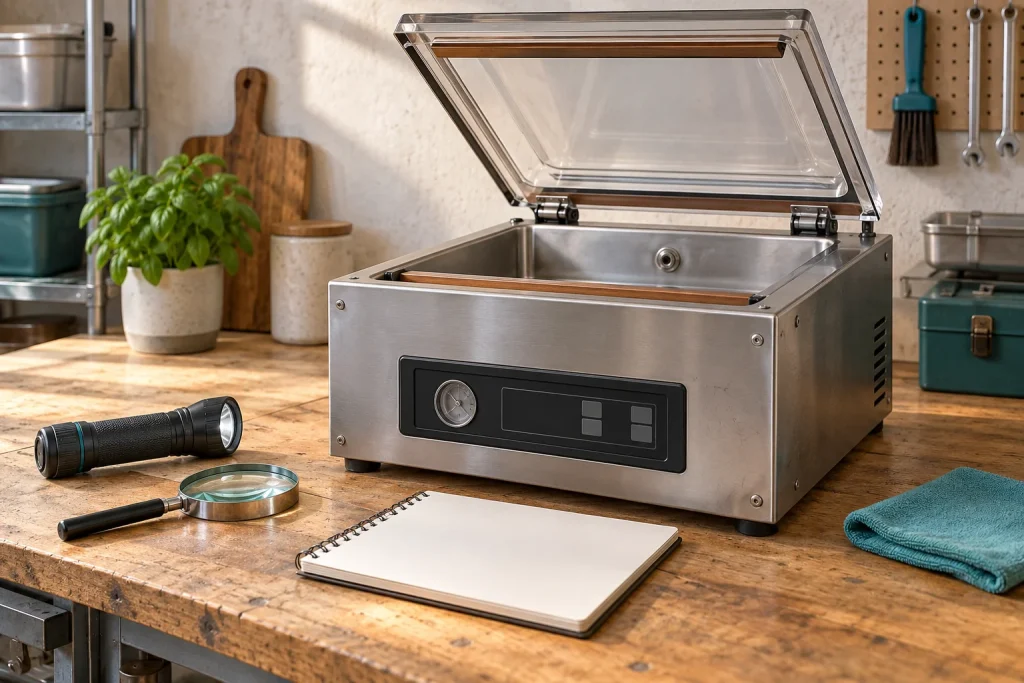
Evaluate a used chamber sealer by model identity, condition, documented operation, parts support, transport and total cost before making an offer.

Match vacuum-sealer ports, hoses, adapters and containers. Understand why jar evacuation, external bags and validated canning are separate processes.

Identify vacuum-sealer gaskets, seal pads, wires and protective tape, then match replacements to the exact model and approved service procedure.
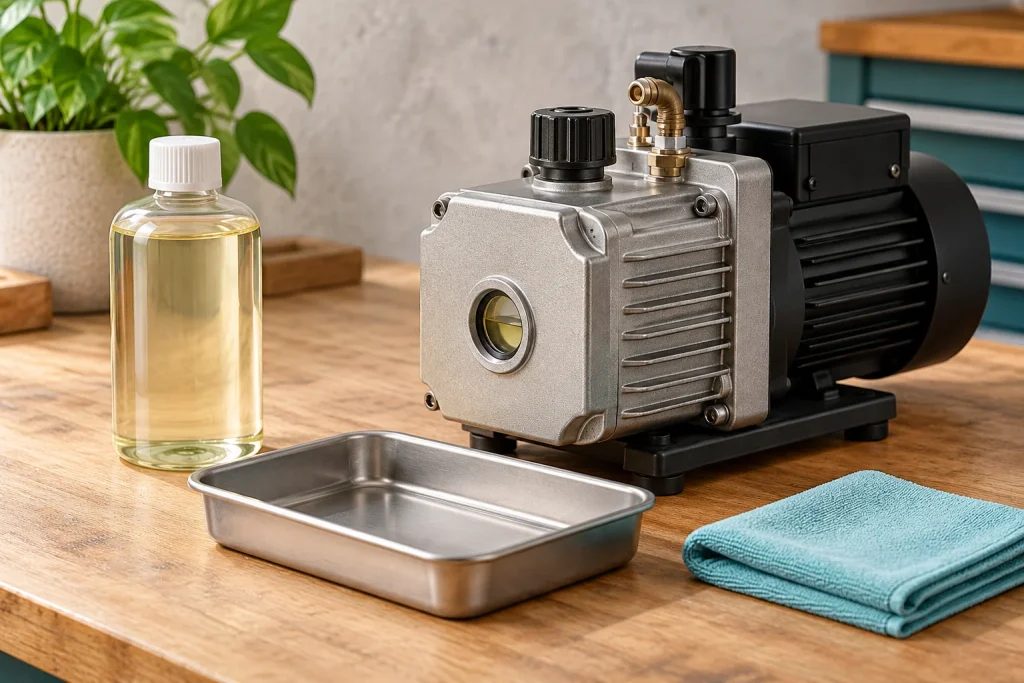
Choose the correct chamber-sealer pump oil and follow the exact service schedule. Understand use-based, storage and condition requirements.
Understand what pump conditioning can do, why moisture matters and when a manufacturer-approved program or service response is needed.
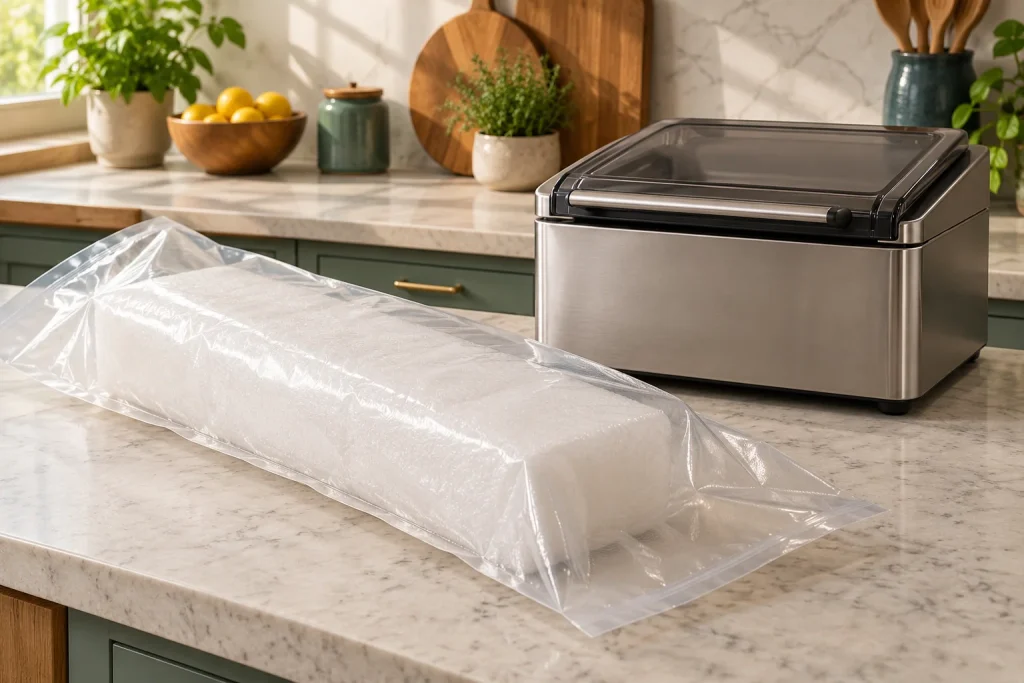
Check whether your chamber sealer supports external bag use, which textured material it needs and why an accessory hose is a different capability.

Compare vacuum bag rolls and precut pouches using equivalent portions, seal allowances, offcuts, compatibility and complete packaging workload.
Understand 3-mil and 4-mil chamber pouch thickness, metric equivalents, puncture considerations and why thickness alone does not establish cooking safety.